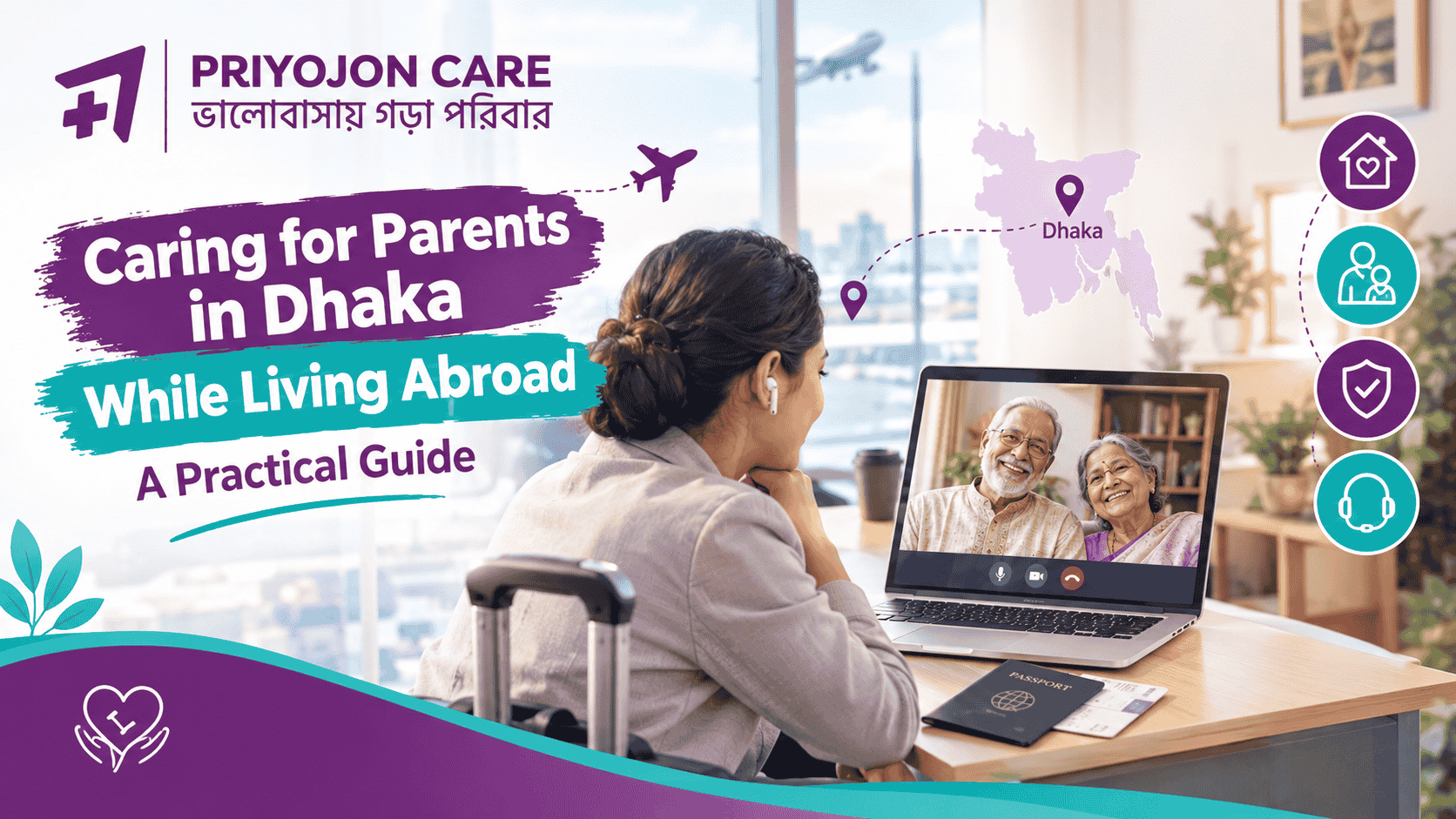
Short answer: To care for parents in Dhaka from abroad, you need three things in place: a trusted person on the ground, a reliable care arrangement (home care or a care home) with regular written updates, and a clear emergency plan covering hospital, consent and payment. Set these up before a crisis, not during one.
The reality many NRB families face
Millions of Bangladeshis live abroad, and many have parents growing older alone in Dhaka. Distance turns small problems into big worries — a fall at night, a missed medicine, a phone that goes unanswered. প্রবাসে থেকে এই দুশ্চিন্তা অনেক সন্তানের প্রতিদিনের সঙ্গী।
Step 1: Honestly assess what your parents need
- Can they cook, bathe and take medicines on their own?
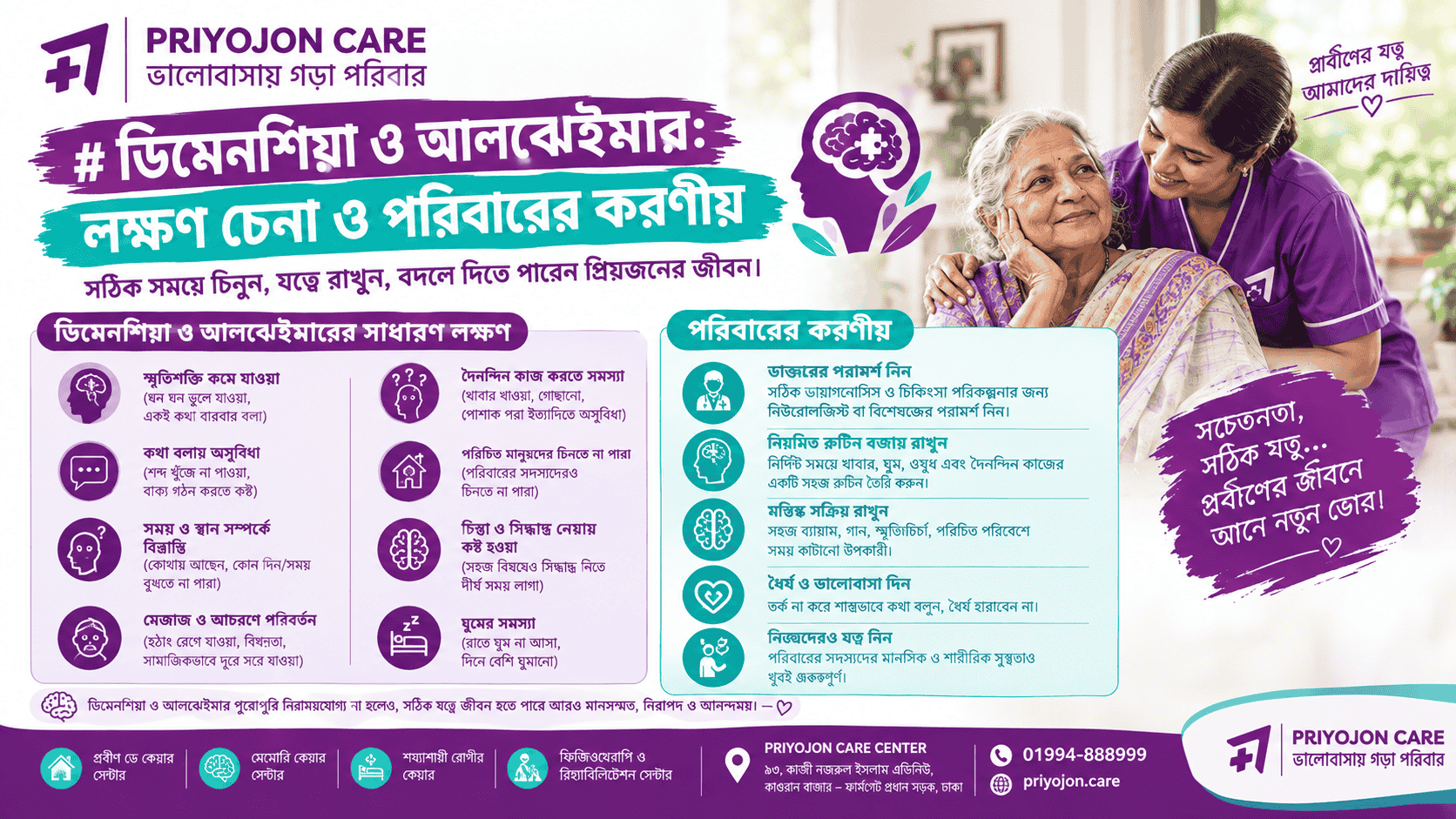
- Are there early signs of memory loss or confusion?
- Have there been falls, hospital visits or new diagnoses recently?
- Are they lonely or isolated during the day?
Ask a local doctor for an assessment, and speak to your parents directly about what they want. Their wishes matter as much as their medical needs.
Step 2: Choose between home care and a care home
| Home care (caregiver at home) | Care home / assisted living | |
|---|---|---|
| Familiar surroundings | Yes | No, but can feel homely |
| Medical supervision | Limited unless you hire a nurse | Nurses, doctor visits, on-call support |
| Backup when staff leave | Your responsibility | The home’s responsibility |
| Emergency response at night | Depends on one person | Shift staff, hospital tie-up, transport |
| Company and activities | Often limited | Other residents, daily activities |
| Oversight from abroad | Hard to verify | Structured reports and video calls |
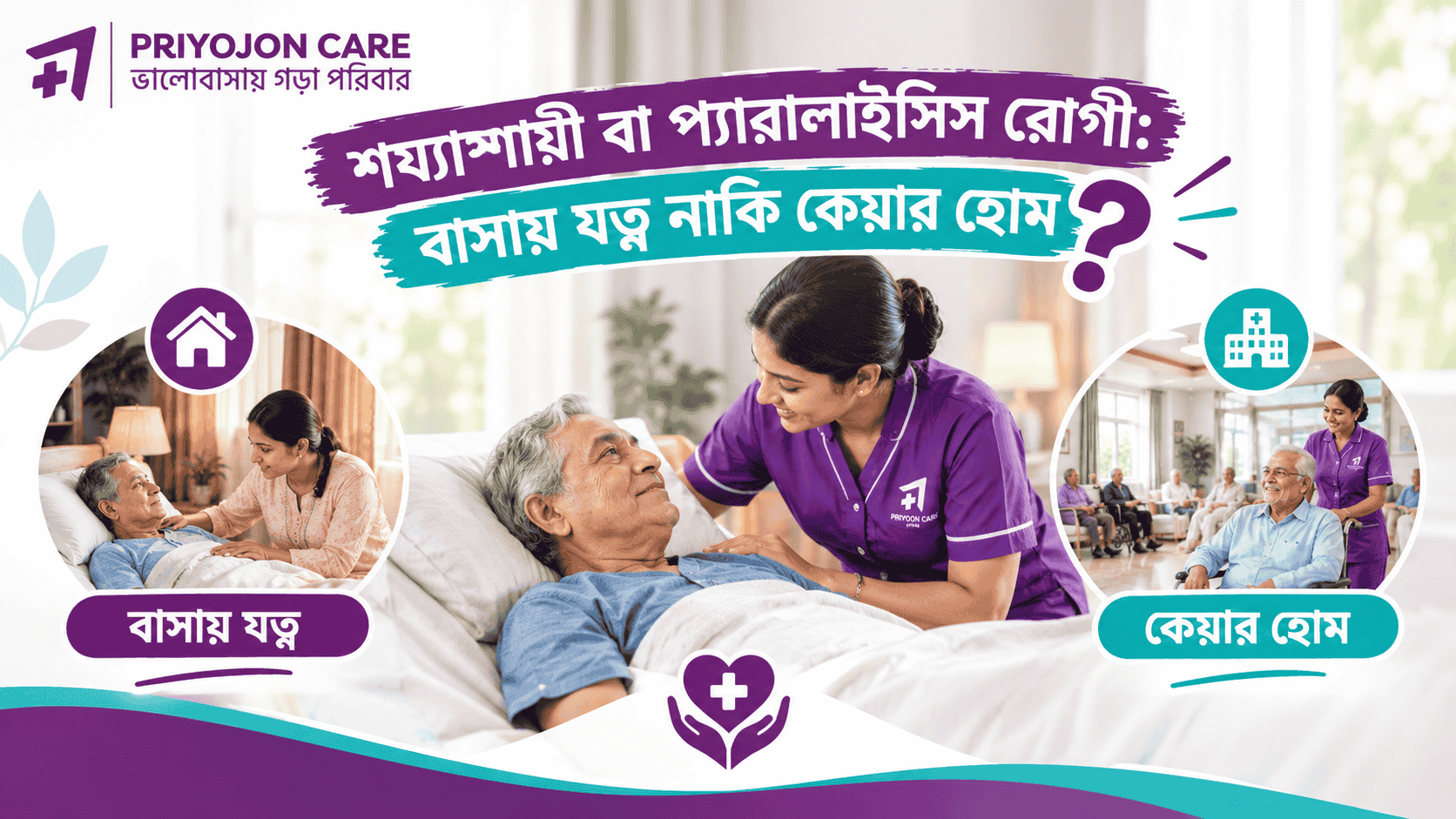
Home care can work well for parents who are fairly healthy and have relatives nearby. For dementia, bedridden care or parents living alone, a good care home is often safer.
Step 3: Vet the care home remotely
- Ask for a live video tour, not just photos — rooms, bathrooms, kitchen and common areas.
- Have a relative or friend visit in person, ideally unannounced.
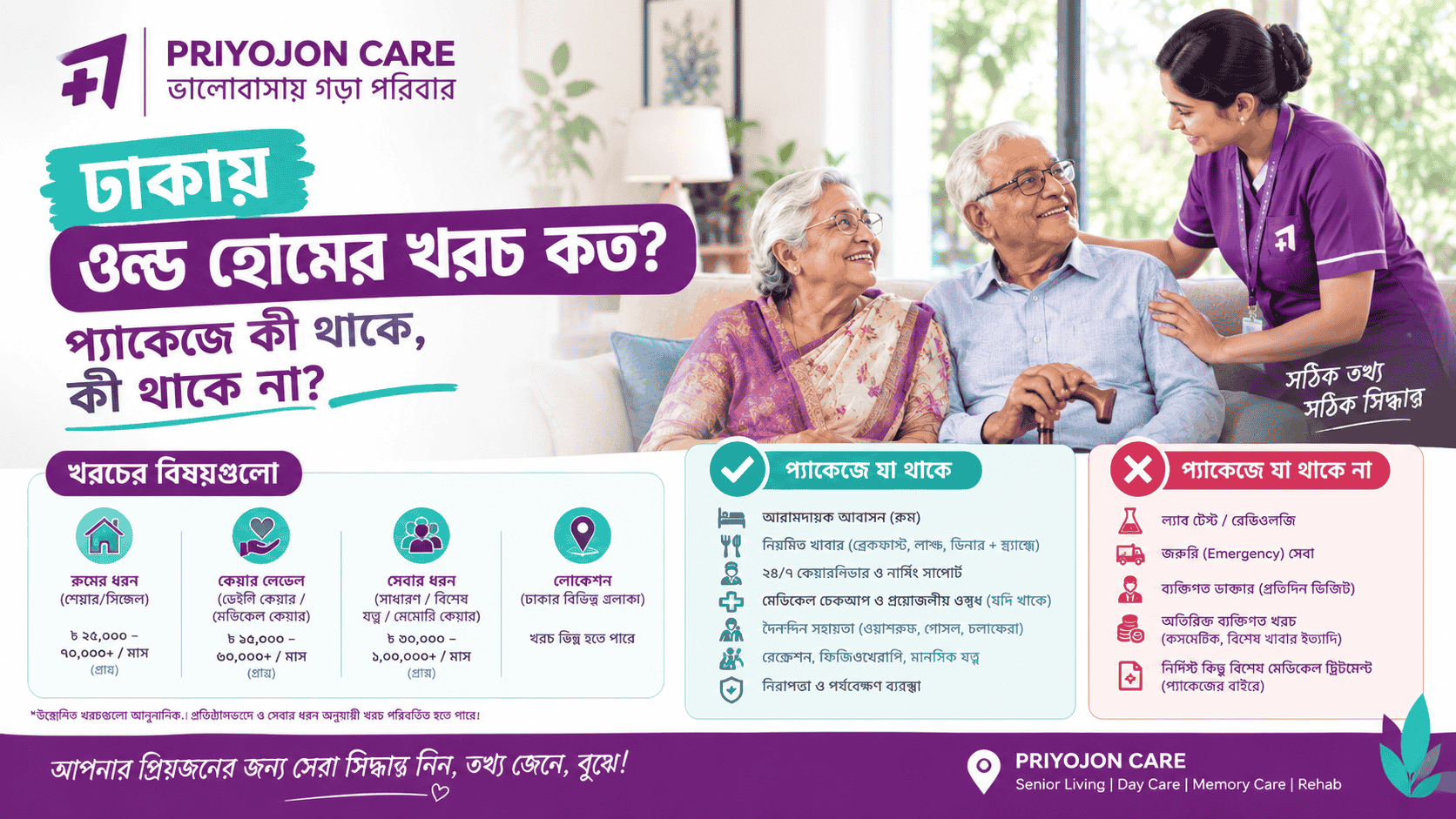
- Request the written package list: what is included and what costs extra.
- Ask which hospital they are tied up with and how emergencies are handled at night.
- Ask to speak with another resident’s family.
Step 4: Put the emergency plan in writing
- Who gives consent for hospital admission if you cannot be reached?
- Who pays the hospital deposit, and how quickly can you reimburse?
- Keep a shared folder with your parents’ NID, prescriptions, medical reports and medicine list.
Step 5: Stay connected, not just informed
Agree on a weekly health update and fixed video call times that suit your time zone. Short, regular calls matter more to parents than long, rare ones. When you visit Bangladesh, spend time at the care home and get to know the caregivers by name.
Paying from abroad
Use legal banking channels and always get receipts. Ask whether the care home accepts bank transfers and provides monthly invoices.
PRIYOJON for families abroad
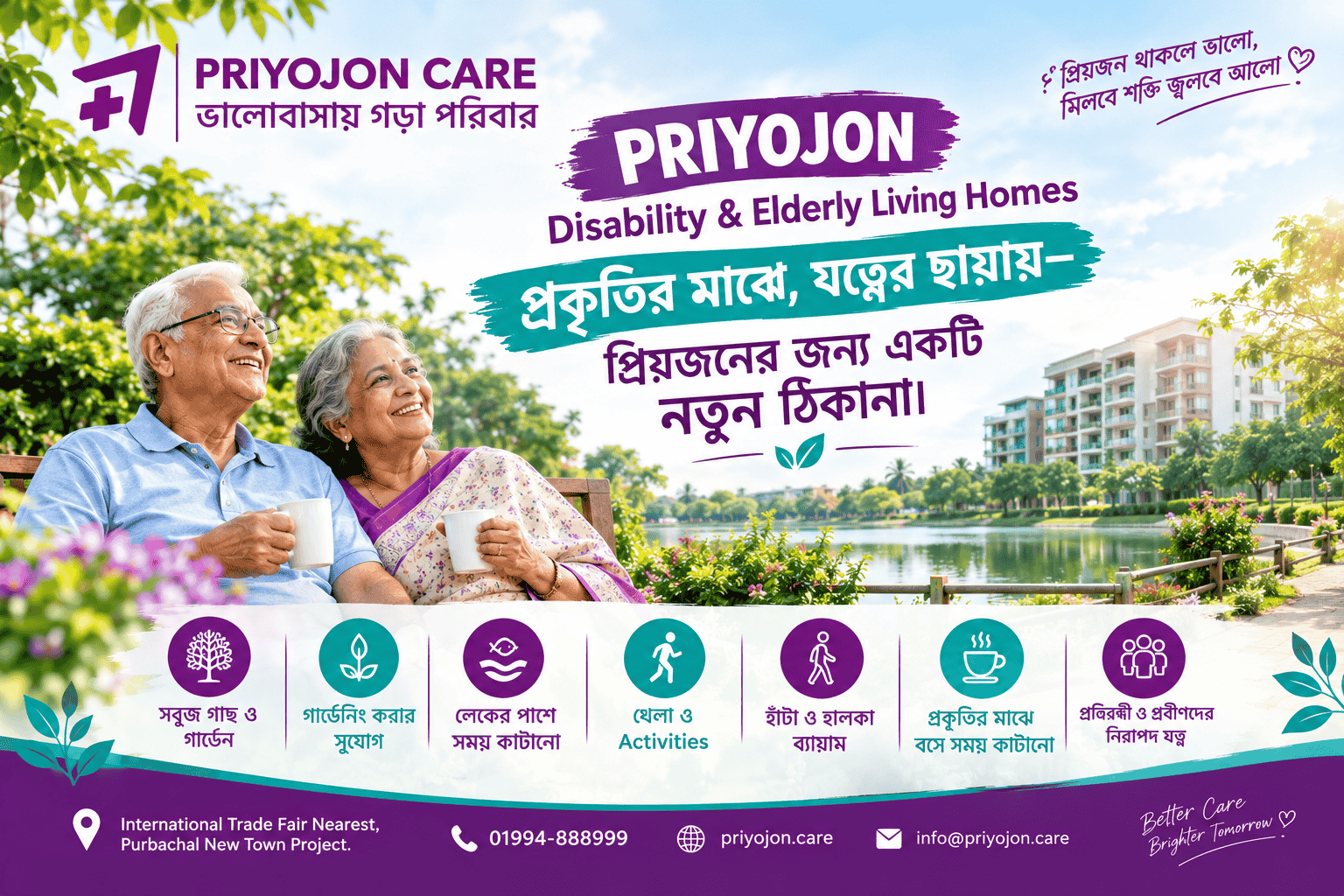
PRIYOJON Disability & Elderly Living Homes in Purbachal Sector 5, near the International Trade Fair area, offers private rooms with attached bathroom, balcony, AC and internet, 24-hour medical staff, twice-weekly doctor visits, hospital tie-up and our own ambulance and car support. Packages start at BDT 25,000 per month. Book a live video tour:
Call & WhatsApp: +8801994-888999 · Website: www.priyojon.care · Email: info@priyojon.care
FAQ
Can I arrange admission for my parents without travelling to Bangladesh?
Yes, many families do. A video tour, a local relative’s visit, a medical assessment and a signed agreement can all be arranged remotely.
How often will I get updates about my parents?
Ask for a fixed schedule in writing — for example, a weekly health summary and immediate calls for any fall, illness or hospital visit.
বাবা-মা যদি কেয়ার হোমে যেতে রাজি না হন?
জোর না করে আগে একবার ঘুরে দেখার বা কয়েক সপ্তাহ পরীক্ষামূলকভাবে থাকার প্রস্তাব দিন। তাঁদের সিদ্ধান্তে অংশ নিতে দিলে মানিয়ে নেওয়া সহজ হয়।